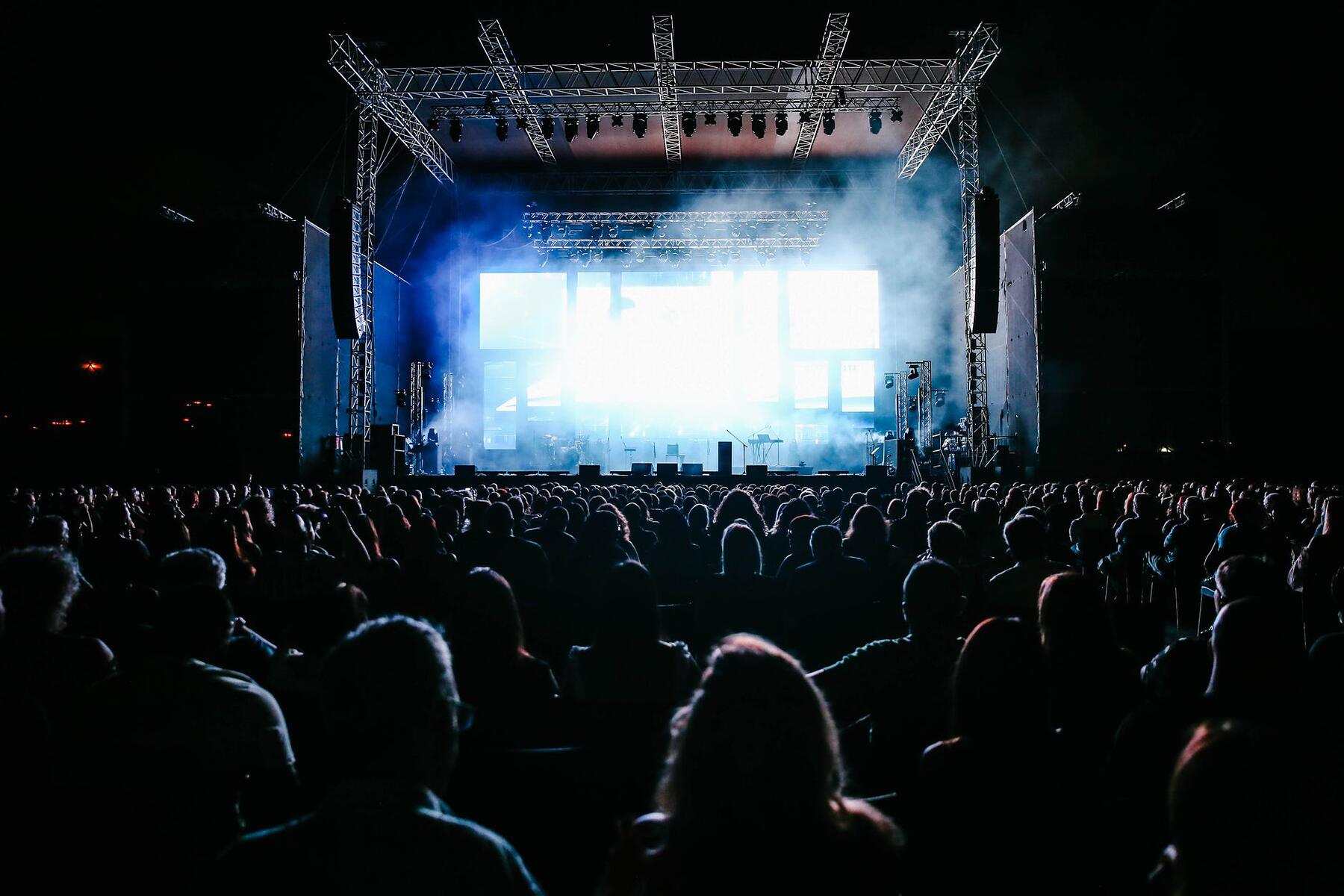
Concert and Festival Security in Orlando
Nexus Security Firm staffs gates, bag check, barricade lines, bar positions and load-out for concerts and festivals across Orange County under FDACS agency license B 1900066. The plan starts with how the crowd gets in and how it would get out, then fills in everything between.
What concert and festival security covers
Coverage is organized around four moments: build, doors, show, and load-out. Build days put officers on a site that is full of staging trucks, rigging and cabling with no fence line finished yet. Doors is the heaviest staffing hour of the event, with gate positions, ticket scanning support, bag check, wanding and the queue itself, which needs officers walking it so the line stays a line. During the show the posts are the barricade at front of house, the pit access points, the aisles and exits, the bars, and the perimeter where the fence meets a dark area.
Load-out returns to the build problem with a tired crew and a venue emptying around them. Between all of it sits the work nobody puts on a floor plan: keeping an exit lane open when a section fills, spotting the person who has stopped moving in a dense crowd, walking a guest back to a friend, and flagging medical rather than treating it. Officers hold the position you assign, and the position list is agreed before the first ticket is scanned.

Estimate what coverage for your event date costs
Event coverage comes down to officer hours and the staffing ratio the venue and the head count call for. Five questions gives you a working range before anyone walks the floor plan.
Figures rest on Florida guard wages (ZipRecruiter, Salary.com, Indeed, 2026) and the standard 1.5x to 2x markup (Belfry Software, 2026). Venue rules and the final head count move the staffing number.
Who books festival coverage and what they are buying
Promoters, venue managers, festival producers and nonprofits running ticketed fundraisers book it, and all of them are buying two things at once: the coverage itself, and the ability to show a venue, a carrier or a permitting body that licensed staff were on site in stated numbers. Venue rental agreements across Orange County name a security requirement, and some name a ratio against expected attendance.
Underneath the paperwork, the working problem is different for each buyer. A promoter is worried about the gate and the barricade. A venue manager is worried about their building, their bars and their exits. A nonprofit is worried about an alcohol service to a guest list that includes donors, and about a crowd that is older, less experienced with general admission and more likely to need help finding a seat. The post plan reflects whichever of those is yours.
What officers can do when a guest has to go
Officers ask a guest to leave and call law enforcement if the guest refuses. Private security in Florida holds no arrest powers, and a company promising to handle removals any other way is describing liability that lands on the event. In practice most ejections end at the verbal stage when the officer is calm, the reason is clear, and a second officer is visible nearby, which is why ejection posts are staffed in pairs where the crowd is dense or alcohol has been flowing for hours.
What makes this work on the night is the decision chain being set in advance: who at your organization authorizes an ejection, what behavior gets one automatically, and when Orlando Police or the Orange County Sheriff's Office is called rather than negotiated around. Officers document every ejection with what was seen and said, and that documentation goes to you, which is the record that matters if the guest complains, files a claim, or shows up at the next date.
How gates, pits and bars are staffed
Nearly all of it runs unarmed. Gate, bag check, barricade, aisle and bar posts are presence, observation and communication work, and a firearm adds nothing to any of them. Officers on these posts carry a Florida Class D license, issued after 40 hours of FDACS-approved training and renewed on a two-year cycle (FDACS Division of Licensing). Posts are assigned by temperament as much as by roster: the barricade needs officers who stay steady facing a crowd for three hours, and the gate needs officers who can repeat the same bag rule 4,000 times without shortening it.
Armed posts show up in two places on a festival: cash handling and box office, and any situation where a specific threat has been identified. A Class G license adds 4 hours of firearms requalification in each year of the two-year period (FDACS Division of Licensing). A supervisor is assigned to the event and attends the posts through the night, which is what keeps a barricade position from becoming an eight-hour stretch with no break.
What festival security costs and what moves the rate
Festival posts bill at roughly $24 to $34 an hour unarmed and $32 to $46 armed in Central Florida. Those bands trace back to Florida guard wages around $14 to $18 unarmed and $18 to $26 armed (ZipRecruiter, Salary.com and Indeed, 2026), lifted to a client rate by the industry markup of 1.5 to 2 times the wage (Belfry Software, 2026). A festival lands high in the band more often than an indoor corporate date does, because the hours are late, the shifts are long and the staffing spike at doors is hard to fill from a single schedule.
Three levers move the total more than the hourly number does. Gate count is the first: every additional entrance multiplies posts across the whole doors window. Alcohol service is the second, since every bar and every ID position is another officer. Hours of build and load-out coverage is the third, and it is the one most often cut first when it should be the last, because a site with gear on it and no fence is the least protected the event will ever be.
What Orlando conditions change about a show
The crowd is unfamiliar with the venue more often than in most markets. Orlando took 76.7 million visitors in 2025 (Visit Orlando), and a large share of any ticketed audience here is visiting, which changes wayfinding, gate matching and the number of people who will ask an officer a question instead of reading a sign. Officers get briefed on exits, medical, lost property and rideshare pickup for the same reason: they are the most-asked people on the site.
Weather runs the rest of it. Summer afternoon storms and lightning holds move a whole crowd at once, and heat through the middle of the day pushes people toward shade and water and creates density where the plan did not expect it. Downtown dates add street-level issues on load-out, and the tourism corridor along International Drive adds shuttle and rideshare surges that arrive in waves. All of this belongs in the post plan before the event rather than in the debrief after it.
How to verify the license before you contract
Agency license B 1900066 is searchable at the Florida Department of Agriculture and Consumer Services Division of Licensing. Nexus Security Firm holds that Class B license and the record is public. Officer licenses come from the same agency: Class D for unarmed work, Class G added for armed posts.
Venues and permitting bodies often want the number on file with a certificate of insurance before they approve the event, so it is worth collecting from every bidder at the quoting stage. A bid that quotes a low hourly rate and cannot produce an agency number is not a cheaper version of the same service.
Coverage usually booked for the same date
Most events book more than one of these for the same run of dates.
How a concert or festival gets staffed
Four steps, starting from the site map and the door time.
-
Send the site map, capacity and schedule
Gates, stages, bars, exits, build days, door time, curfew and load-out. Expected attendance and whether the event is general admission or reserved change the barricade and aisle plan more than the headline count does.
-
Post plan by phase
Build, doors, show and load-out are quoted separately with their own counts, because doors needs the most officers and load-out needs the most patience. You can see and adjust each phase on its own.
-
Rules, ejection chain and radio plan
Prohibited items, what happens to them, who authorizes an ejection, when law enforcement is called, and which channel officers use to reach your production lead. Officers apply your rules consistently once the rules exist.
-
On site from build to last truck
Officers report in uniform for the brief, a supervisor is assigned to the event and attends the posts, and everything from an ejection to a medical assist is documented and sent to you.
What to expect
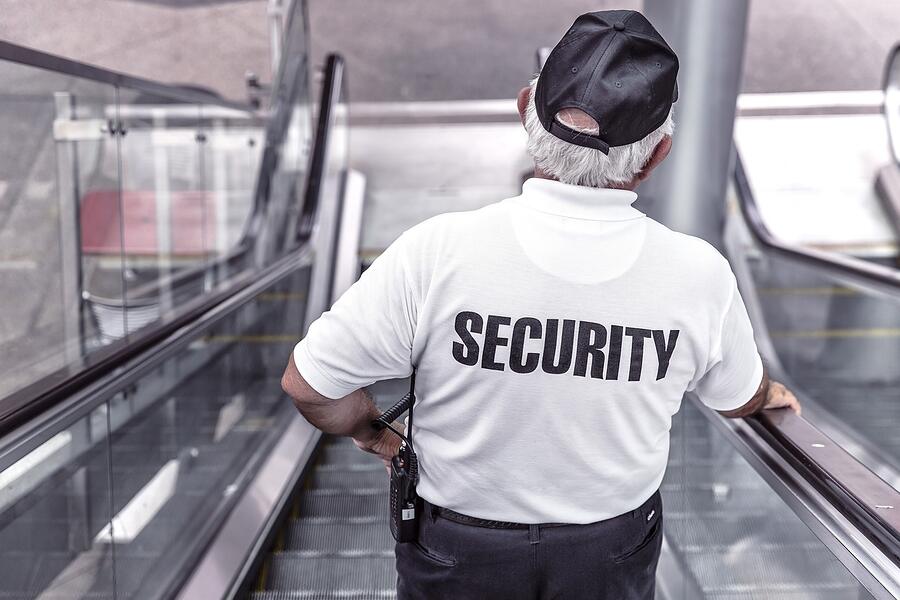
What coverage looks like from the production office:
- Gate and bag check posts staffed heaviest at doors
- Barricade positions held for the full set, with relief
- An officer at every bar and ID position
- Exits and aisles kept clear as sections fill
- A supervisor assigned to the event who attends the posts
- Ejections and medical calls documented and sent to you
Why promoters and venues book this coverage
-
Doors is staffed as its own event
The first hour after doors decides the night. Queue management, bag check throughput and gate matching all fail at the same moment if the count is built from an average across the whole event. Coverage is weighted to that window and then steps down, which costs less than staffing the peak level for eight hours and works better than staffing the average.
A large share of any Orlando audience is visiting the city, in a year with 76.7 million visitors (Visit Orlando), so gate questions and wayfinding land on officers.
-
Ejections handled inside what the law allows
Officers ask a guest to leave and call law enforcement if they refuse, and the authorization chain is agreed with you before doors. That keeps your event out of unlawful detainment exposure and gives you a documented account of each removal, which is what gets asked for later by a carrier, a venue or a guest's attorney.
Every ejection is documented and the documentation goes to the promoter or venue.
-
One licensed Florida agency behind every post
Nexus Security Firm employs and deploys the officers working your event under FDACS Class B agency license B 1900066. Nothing is passed to a second company mid-event, so the license you check is the license of the people at your gates, and the supervisor you meet at the brief is the supervisor on the radio at midnight.
Class D officers complete 40 hours of FDACS-approved training, valid two years (FDACS Division of Licensing).
What Reddit Says About Concert and Festival Security in Orlando
The most consistent message from working officers on Reddit concerns the limits of the role. Threads about being instructed to handcuff or detain non-violent trespassers draw near unanimous advice to refuse the instruction and leave the employer, because unlawful detainment exposure is real and it attaches to the officer and the client. The sequence they describe as correct is the one that belongs in every event brief: ask the person to leave, and call police if they will not.
Officers are also less enthusiastic about being armed than vendor marketing suggests. The common position is that arming should follow the actual risk at the post, with several saying the added liability is not worth carrying on a low-risk site. For a festival that argues for unarmed gate, barricade and bar posts, with armed coverage reserved for cash handling or an identified threat.
Two operational warnings recur and both apply directly to long event days. Threads describe supervisors knowing about an open shift for days without arranging relief, then an officer absorbing a sixteen hour double, and they tie sleeping on post to those doubles more often than to individual character. Separately, a thread on how bill rates are built drew the observation that competing on lowest bid decides who ends up standing at your gate, with one commenter describing being pushed to hire people they would never otherwise hire. Both are reasons to ask a bidder how relief is scheduled across a festival day before comparing hourly numbers.
A common Orlando festival call
The situation: A two-day outdoor music festival with an expected 6,000 a day, three gates, two stages and four bars. The producer has run the event twice before with a staffing plan built as a single number for the whole day. Both previous editions had the same complaint: the gate line at doors ran long enough that people gave up on bag check and pushed, and the barricade crew had no relief after the second set.
What gets done: Coverage is rebuilt by phase. Build days get a small overnight presence on the site while staging and gear sit out. Doors gets the heaviest count of the event, with officers walking the queue and pairs at each bag check position, then steps down an hour after the gates settle. Show hours put pairs on the barricade with scheduled relief, one officer per bar plus an ID position, and roving officers on the exits as the front fills. The producer names who authorizes an ejection and which radio channel reaches them. Load-out keeps a reduced team on the site until the last truck.
How it turns out: The producer gets a documented record of ejections, medical assists and lost property across both days, along with timing on how long the doors surge lasted. That timing sets next year's plan: the gate count holds, the mid-afternoon count drops, and the money saved pays for the build-night coverage that had been skipped.
Concert and festival security questions
What promoters, producers and venue managers ask before a date.
Staffing the event
How many officers does a festival need?
Gates, bars, stages and expected attendance set it together. A 2,000 person single-gate show with one bar looks nothing like a 6,000 person three-gate festival with four bars at the same site. Counts are built per phase, with doors staffed heaviest, so you are paying peak numbers only during the peak.
Do you staff the barricade and the pit?
Yes, in pairs where the crowd is dense, with relief scheduled across the set. Barricade positions are the ones most often understaffed in a low bid, because they are the hardest to hold for hours and the easiest to leave off a plan that counts only entrances.
What about bag check and prohibited items?
Officers run bag check and wanding against the rule you publish. The rule needs to state what is prohibited, what happens to a prohibited item, and who can authorize an exception. Officers apply it the same way at every gate, which is what keeps the queue moving and the complaints down.
Do we need coverage on build and load-out days?
It is the block most often cut and the one with the least protection behind it. A site with staging, rigging, audio gear and cabling out in the open and no completed fence line is the most exposed the event will be. It is usually a small overnight count, which makes it cheap relative to what is sitting on the ground.
Authority, alcohol and cost
Can officers eject a guest?
Officers ask a guest to leave and call law enforcement if the guest refuses. There is no arrest power in Florida contracted security. The ejection authority chain at your event should name who authorizes a removal and when Orlando Police or the Orange County Sheriff's Office gets called, and officers document every one.
Can officers check IDs at the bars?
Officers hold ID check positions and support your bar staff, and the service decision stays with the license holder serving the alcohol. Most alcohol-related problems at events start at the entrance to the bar area rather than at the bar itself, so the position usually sits where the line forms.
What does concert security cost in Orlando?
Roughly $24 to $34 an hour unarmed and $32 to $46 armed, built from Florida guard wages of about $14 to $18 unarmed and $18 to $26 armed (ZipRecruiter, Salary.com and Indeed, 2026) and industry bill rates of 1.5 to 2 times the wage (Belfry Software, 2026). Late hours, long shifts and short-notice dates sit at the top of the band.
What happens if weather stops the show?
Officers work your severe weather plan, which needs to exist before the date. Central Florida lightning holds move an entire crowd at once, so the plan should name the shelter locations, who calls the hold, and which posts move with the crowd and which stay with the site and the gear.
How do I verify the license?
Look up agency license B 1900066 on the FDACS Division of Licensing public lookup, and ask every bidder for the same. Officer licenses come from the same agency, Class D for unarmed work and Class G for an armed post. Venues and permitting bodies usually want the number on file with a certificate of insurance before they release the site.
Still have a question? Call (407) 329-6099 and ask.