Event Security in the Convention Center District
The Orange County Convention Center runs roughly 200 events and more than 2 million attendees a year across a West Concourse and a North-South Building (OCCC / Orange County). Nexus Security Firm staffs the parts of that show nobody buys a ticket to see: the freight doors, the dark hall overnight, and the badge line at 7am.
Event Security in Convention Center District
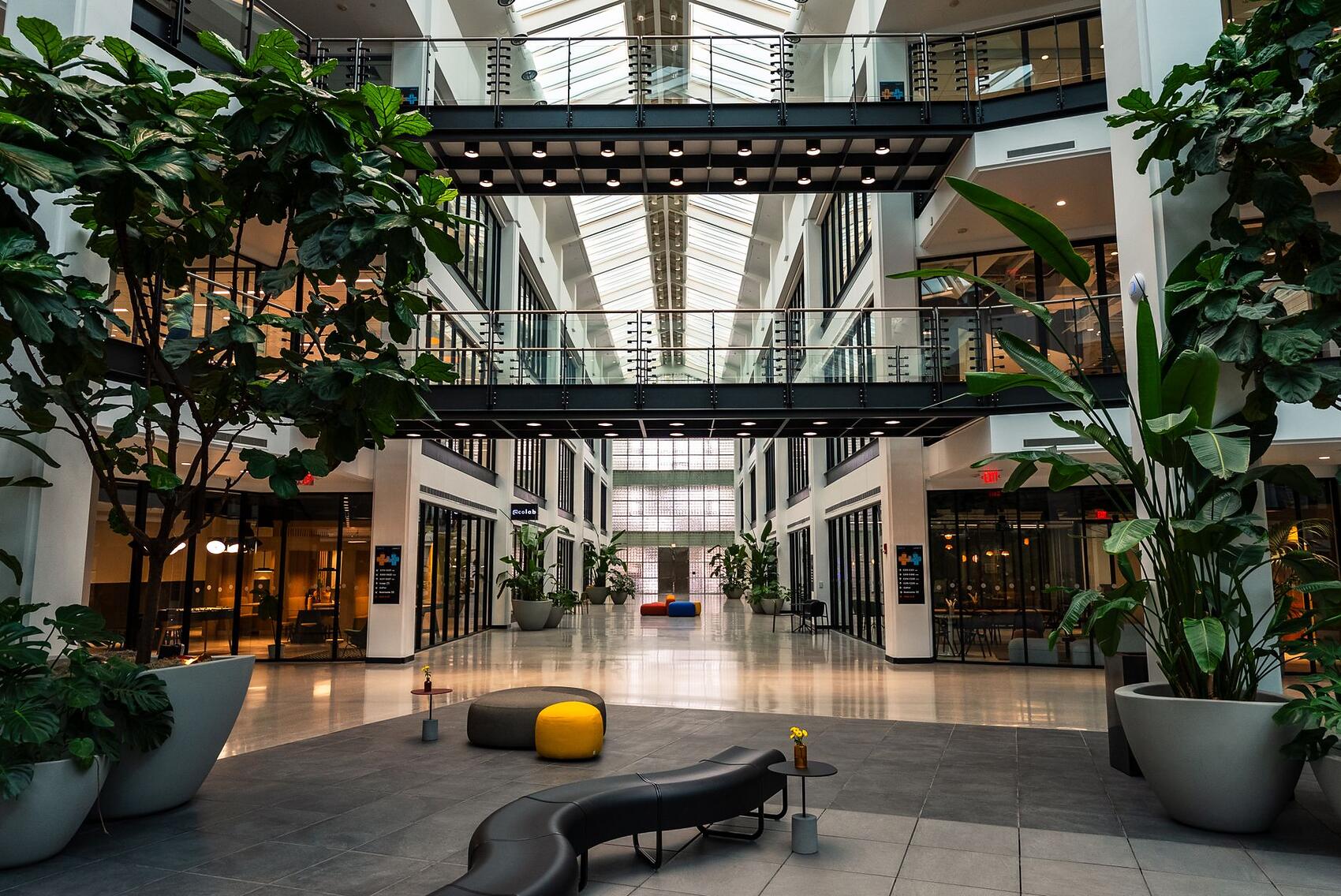
This submarket is one campus and the hotels wrapped around it. The convention center carries about 2.1 million square feet of exhibition space split between the West Concourse and the North-South Building, with underground docks, drive-in entrances and truck bays feeding the halls (OCCC). Several hotels on the same block hold meeting space of their own, and one connects to the West Concourse by covered skywalk, so a single show can spill across a public street without anybody calling it a second venue.
That geometry decides the staffing. A show here rarely has one perimeter. It has a hall entrance, a freight entrance, a skywalk, a hotel ballroom holding the sponsor reception, and a shuttle drop where attendees arrive in waves of forty. Each of those is a different post with a different rule, and the badge that works at one may be the wrong tier at the next.
The other thing this district does is build. The $560 million Grand Concourse expansion of the North-South Building broke ground in 2026 and runs to 2029, adding 650,000 square feet including a 100,000 square foot ballroom (OCCC). Construction changes vehicle routes, pedestrian paths and the walk from a hotel to a hall, and a post plan written from last year's map sends officers to doors that people no longer use.
Move-in and move-out carry most of the exposure
The hours around freight are when a show is most open and least watched. Underground docks and 24-foot truck entrances put a steady line of vehicles and general service contractor labor into the building at a point where nobody has been badged yet and the hall is full of open crates. Coverage for these windows means an officer at each active freight door checking labor and exhibitor credentials, one in the freight aisle keeping the lane clear so forklifts are not working around parked pallet jacks, and a floor position once booths start to hold product. Move-out compresses all of those problems into a single night, with the added pressure of exhibitors who want to be on the road and will leave a case unattended to get there.
Badge control works when the tiers are written down first
Credential enforcement on this campus fails at the seams between buildings, so the plan has to name them. A show using halls in both concourses has attendees crossing between them, sponsors moving to a hotel ballroom across the street, and press with access to a room the general badge does not open. Officers hold whatever rule your organization sets, which means the rule has to exist before doors: what each badge color opens, what a ribbon adds, who at your registration desk can authorize an exception, and what happens to a badge handed off in the lobby. Where you supply a scanner, officers work it. Where the check is visual, the post needs a sample board and light a person can read a badge under.
The dark hall between show days is its own post
Between the close of day one and the open of day two, a hall holds every exhibit still standing with product in it and no attendees to notice a stranger. Halls running to nearly 300,000 square feet under a 40-foot truss do not supervise themselves from a door. An overnight position walks the aisles on an irregular pattern, holds the freight doors that stay unlocked for late setup, and documents anything found out of place, so an exhibitor reporting a missing demo unit in the morning has a record to work from. A supervisor is assigned to the event and attends the posts, including the overnight, which is the shift where attendance matters most.
Half of a convention program happens outside the hall
Board meetings, sponsor receptions, awards dinners and hospitality suites run in the hotels on this block while the show floor is closed. Those rooms have their own entrances, their own public lobby traffic passing the door, and a guest list that only your team can verify. A hotel event post is a door position with a list, and it works when somebody from your organization stands beside it for the first twenty minutes to resolve the names that do not match. Shuttle drops and the skywalk are the other pinch points, because both deliver a burst of people to one doorway and then go quiet for ten minutes.
Know which agency responds before you need one
The convention center campus sits in unincorporated Orange County, so the Orange County Sheriff's Office is the responding law enforcement agency across most of this district. That matters because private officers hold no police powers in Florida. The sequence at a trade show is the same as anywhere else: a person who should not be in a space is asked to leave, and law enforcement is called if they refuse. The building also has its own facility requirements and its own staff, and a private security plan sits alongside them. Ask show management what the venue requires of contracted officers before you set post counts, because it can change the count.
What a badge post looks like at hall entry
A credential post at a hall entrance is a standing position with a sight line down the approach, placed so the officer reads a badge before a person is past them. It runs on one written rule and a way to reach your registration desk. At peak ingress the position doubles so the line keeps moving, because a queue that stalls at a convention center door pushes back into a concourse full of people walking to a different hall.

Why show organizers use this agency on this campus
-
Posts written from your floor plan and freight schedule
Staffing here comes from documents you already have: the hall assignment, the move-in schedule, the freight door times and the badge matrix. Those produce a post-by-post count with hours against each position, so a show manager can see the cost of covering a second freight door and decide against it. Optional posts are marked optional. Where a thinner pattern covers the same window, we say which position to drop before you sign anything.
OCCC activity supports more than 28,000 jobs across Orange County and $4.6B a year in economic impact (OCCC / Orange County).
-
A Florida agency license you can check yourself
Nexus Security Firm holds FDACS Class B agency license B 1900066. Officers posted on this campus hold a Florida Class D license, with a Class G added where a position is armed. Facility management and your insurance carrier will both ask. The number is a public record you can pull from the Florida Department of Agriculture and Consumer Services license lookup without asking us for it. Ask every bidder for an agency number and check it.
Florida sets 40 hours of FDACS-approved training behind a Class D officer license, renewed on a two year cycle (FDACS Division of Licensing).
-
The rate is broken out before the contract
Convention coverage in Central Florida runs about $24 to $34 an hour unarmed and $32 to $46 armed. That comes from Florida guard wages of roughly $14 to $18 unarmed and $18 to $26 armed (ZipRecruiter, Salary.com and Indeed, 2026) against industry bill rates of 1.5 to 2 times the wage (Belfry Software, 2026). Overnight hall positions and short-notice dates sit at the top of the band, and we say so on the call.
Roughly 10 percent of a security bill rate covers indirect cost, with about 70 percent reaching the officer (Belfry Software, 2026).
A common call from a show organizer on this campus
The situation: A typical association show takes one hall in each building, runs two move-in days, three show days and an overnight move-out, and holds a sponsor reception in a hotel across the street on the middle evening. The organizer has budgeted badge check at the main hall entrances. Exhibitors on the last edition reported product missing from two booths, both noticed before doors on the opening morning.
What gets done: Coverage is rebuilt in blocks. Move-in gets officers at each active freight door and one in the aisle. Show hours get badge posts at every open hall entrance plus a rover in the aisles of the hall with the highest-value exhibits. The hours between close and open get a walking overnight position in each hall. The sponsor reception gets a door post with a list and a named contact from the client team standing with it during arrivals. Move-out gets the heaviest count of the week and holds until the last truck leaves.
How it turns out: The organizer sees where each hour goes and cuts one badge post at an entrance that stays closed until noon. Anything that happens is documented and the documentation goes to the organizer, which is what turns a conversation with an exhibitor into a record instead of a memory.
Questions show organizers ask about this district
Five things that come up on a first call about a convention center date.
Staffing a show on this campus
Do we need officers if the convention center already has its own staff?
Facility staff cover the building. Contracted officers cover your show: your freight doors during your move-in, your badge tiers, your exhibits overnight, and your sponsor room in a hotel across the street. Ask show management what the building provides and where it stops, then build the private plan to fill that gap instead of duplicating it.
When should coverage start and stop?
Coverage usually starts with the first freight truck and ends when the last one leaves, which is wider than most first budgets assume. Show hours are the easiest window to cover and the least likely to produce a loss. Move-in, the overnight between show days and move-out are where booth product is exposed, and a plan that funds only show hours leaves those unwatched.
How many officers does a trade show need?
It comes from open doors more than from attendee count. A single-hall show with two entrances and one freight door can run on a handful of posts. A two-building show with four hall entrances, two freight doors, an overnight and a hotel evening event runs several times that. The count we build names each position so you can see what each one buys.
Can officers stop an attendee from taking something off a booth?
Officers are a presence at the point of exposure and a documented account of what was seen, and they call law enforcement, which on this campus means the Orange County Sheriff's Office. Detention sits outside what contracted event officers do in Florida. The practical protection for exhibitor property is a post at the freight door and in the aisle during move-in and move-out, when most of it goes missing.
Does the ongoing expansion work affect the plan?
It can. The Grand Concourse expansion of the North-South Building runs from 2026 to 2029 (OCCC), and construction shifts vehicle routes and walking paths on the campus. We build posts from the current access plan your show is issued, and we walk it with you where the show is large enough to justify the time.
Still have a question? Call (407) 329-6099 and ask.
Other areas we staff events
Events in the adjoining areas run off the same roster, so a date in one does not rule out a date in another.