Event Security in Lake Nona
Lake Nona hosts medical symposia, corporate training programs, national tennis tournaments and open community festivals inside the same few square miles. Nexus Security Firm staffs the credential tiers those programs run on and the open Town Center dates that have no credentials at all.
Event Security in Lake Nona
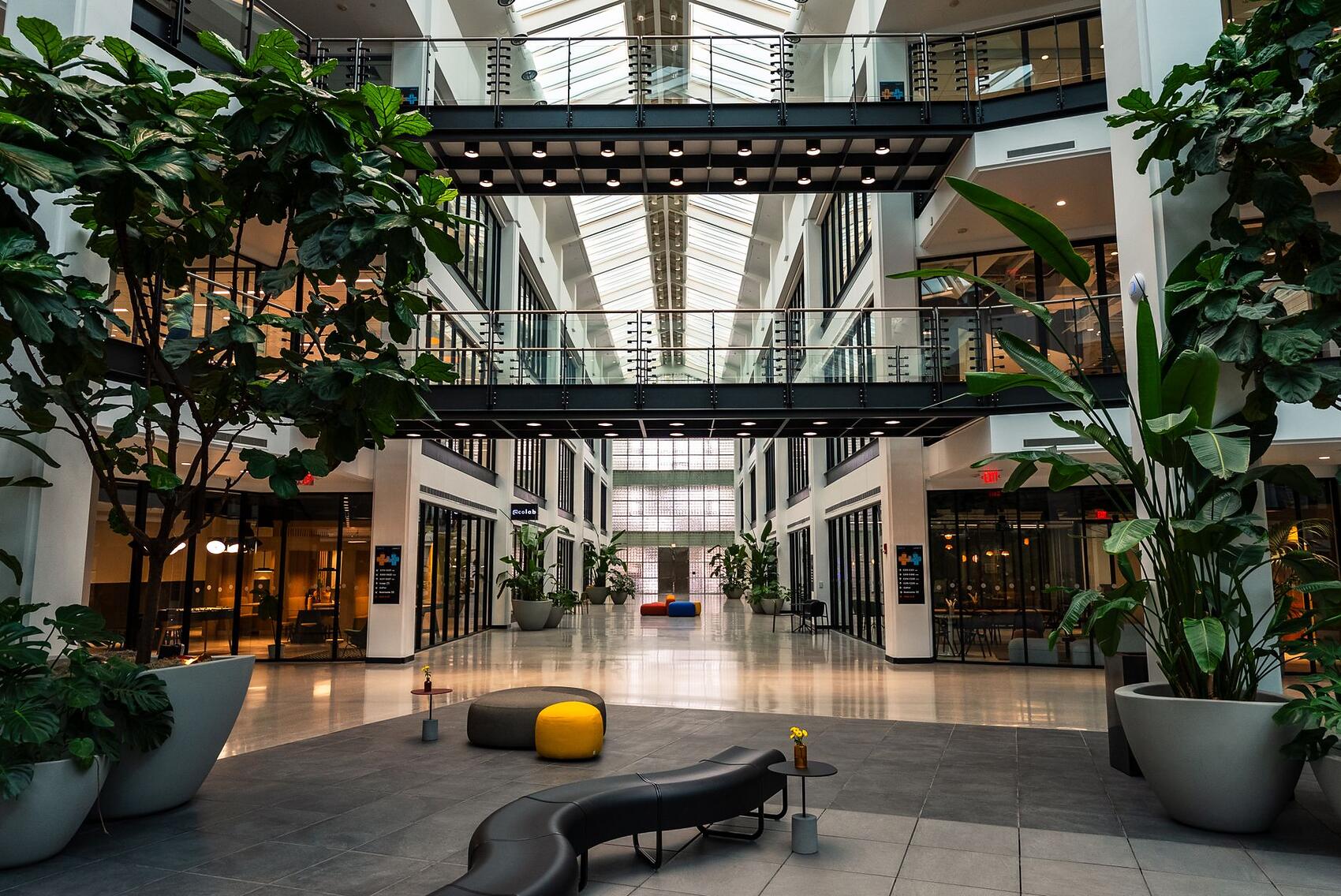
Lake Nona is two event markets sharing a zip code. One is institutional. Medical City anchors a health and life sciences cluster that includes the UCF College of Medicine and Health Sciences Campus, the Orlando VA Medical Center, Nemours Children's Hospital, a University of Florida research and academic center and the GuideWell Innovation Center, and those institutions run symposia, grand rounds, research meetings and press events with their own access rules. A corporate training campus in the district covers 767,000 square feet on 55 acres with 90 classrooms and innovation labs, a 1,000-seat auditorium and 800 guest rooms.
The second market is open. Lake Nona Town Center runs a weekly food truck rally, a farmers market twice a month, and a seasonal calendar that includes an art festival in February, a spring festival at the USTA National Campus, a 5K and a tasting event in May, fireworks in July and a holiday program in December. Boxi Park is a 30,000 square foot outdoor venue built from repurposed shipping containers with beach volleyball courts and a live entertainment stage. The USTA National Campus holds 100 fully lit courts and two championship stadium courts and has hosted NCAA championship play.
An officer working a symposium door and an officer working a food truck rally are doing different jobs in the same district, and the plans should look nothing alike.
Institutional programs run on tiers, and the tiers need enforcing
A medical or research program typically has a general session anyone registered can attend, a closed session that a subset can, a press arrangement with its own rules and sometimes embargoed content that decides who may be in a room. Credential enforcement here means a post at each controlled door with a written rule, a badge design that an officer can read across a corridor, and one named person from your team authorized to make an exception. Where the venue is a hospital or university building, the institution has its own security and its own policies, and your contracted posts sit inside those policies. Ask the host what they require before you set counts.
A corporate campus brings its own rules to your event
Events hosted on a private corporate campus in this district come with a host security function, an access system that is already in place and a set of rules you did not write. The contracted officer's job there is your program: the registration desk during the arrival window, the doors of the rooms that are restricted while they are live, and any offsite element of the program at a hotel or restaurant. Coordination matters more than count. We want the host's requirements in writing during planning, including where officers may stand, what they may carry and who they report a situation to on the day.
A tennis campus event spreads across a hundred courts
A tournament at a campus with 100 lit courts and two stadium courts has no single crowd and no single gate. Spectators, players, coaches and officials move between distant courts all day, and the credentialed areas are player zones and stadium seating rather than a hall. Coverage is a check-in post at the main entry, positions at the stadium court entrances during featured matches, a presence at any player area boundary, and a rover covering the outer courts where the crowd thins to a handful of people. Multi-day tournaments also leave equipment, sponsor build and vendor stock out overnight, which is a separate line on the plan.
Town Center events have no gate and a resident audience
The community side of Lake Nona runs on open ground: a town center plaza, a container park with a stage and volleyball courts, and a market on a walkable street. Attendance is residents, families and people from the surrounding neighborhoods walking or driving in, with no ticket and no boundary. The staffing questions become where alcohol is served, where the stage barrier sits, where vendors keep cash and stock, and where the walk back to parking runs after dark. These dates are usually small in officer count and specific in placement, and padding them with extra bodies buys nothing.
Access runs through a small number of roads
Lake Nona is a master-planned district reached by a limited set of arterials, with Orlando International Airport close enough that out-of-town attendees arrive directly into an event without touching the rest of the city. That is good for arrivals and hard on departures, because a few hundred vehicles leaving a campus at the same moment meet a road network built for daily commuting. Where an event ends at a fixed time, a post at the main vehicle exit and one on the pedestrian route between the venue and overflow parking does more for the last thirty minutes than another officer inside the building. Lake Nona sits within Orlando city limits, so the Orlando Police Department is the responding agency.
What a closed-session door post looks like
The post stands at the corridor side of the door with a sight line down the approach and a printed rule in hand, so a person is met before they reach the handle. It runs in business attire for a medical or executive program, because the room being controlled is full of people who will read a high-visibility vest as a problem. The position needs one named contact on your team and a radio, and it needs the rule to have been settled before the first session rather than argued at the door.

Why Lake Nona hosts and planners use this agency
-
Posts written from the access rule
In this district the question is almost never how large the room is. It is who may be in it, who decides, and what happens to the person who should not be. We build the post list from the credential matrix, name the exception path, and give you the count with hours and a rate against each door. Where a session does not need its own post, we say so and the position comes off the quote.
Medical City anchors institutions including the UCF College of Medicine, the Orlando VA Medical Center and Nemours Children's Hospital.
-
Officers who coordinate with a host security function
Most Lake Nona venues have their own security, their own access system and their own policies, and a contracted agency that ignores that creates friction on the day. We ask for the host's requirements during planning, agree what our officers cover and what they do not, and brief every post on where the line sits. That is the arrangement that keeps a university, a hospital or a corporate campus willing to host your program again.
Nexus Security Firm works under FDACS Class B agency license B 1900066, verifiable on the FDACS public lookup.
-
Rates explained, including why some hours cost more
Unarmed event posts in Central Florida run about $24 to $34 an hour and armed posts $32 to $46, built from Florida guard wages of roughly $14 to $18 and $18 to $26 (ZipRecruiter, Salary.com and Indeed, 2026) against bill rates of 1.5 to 2 times the wage (Belfry Software, 2026). Overnight equipment coverage at a multi-day tournament and single-shift weekday posts sit at the top of those ranges, and we say which of your hours land there.
About 70 percent of what you pay per hour reaches the officer standing the post (Belfry Software, 2026).
A typical Lake Nona conference call
The situation: A common call comes from an organizer running a two-day clinical conference at a Lake Nona venue: a general session, four concurrent breakouts, an industry exhibit area, a closed investigator meeting on the first afternoon and an evening reception at a nearby hotel. Registration is about 400. The host institution has its own security team and its own building policies. The organizer's concern is the closed meeting, where attendance is restricted and content is embargoed.
What gets done: Registration is staffed heavily for the arrival block and lightly afterward. Breakout doors are covered only during the hours they are live. The closed meeting gets a post at its single entrance working from a printed list with one named organizer authorized to approve an addition, and a second officer holds the corridor approach while the session runs. The exhibit area gets a post overnight because vendor equipment stays in place. The offsite reception gets a door position with the guest list.
How it turns out: The organizer sees the plan split hour by hour and removes two breakout posts that overlap a block where everyone is in the general session. The closed meeting holds because the rule and the exception path were settled in advance, and everything that occurred is documented for the organizer and the host.
Lake Nona event security questions
What conference organizers, campus hosts and community event producers ask here.
Programs, campuses and coverage
The venue has its own security team. Do we still need officers?
Usually yes, because the two cover different things. Host security is responsible for the building, its staff and its own policies. Contracted officers are responsible for your program: your registration desk, your credential tiers, your closed sessions and your offsite evening. Get the split agreed in writing during planning so neither side assumes the other has a door.
How do you handle a closed or embargoed session?
With one entrance, one written rule and one named person on your team who can authorize an addition. The officer works from your list and turns away anyone not on it, including people who are used to being waved through. A second position holding the corridor approach stops the conversation happening at the door itself, which is what keeps the room quiet.
Do community events at the Town Center need officers?
It depends on what is being served and what is left out. A weekday food truck rally may need nothing. An evening festival with alcohol service, a stage, vendor cash and a dark walk back to parking has four or five places worth a post. We would rather tell you which two matter than quote you eight.
Can you cover a multi-day tournament with gear left on site?
Yes, and the overnight is usually the most valuable part of it. Sponsor build, vendor stock and equipment sit out between days on an open campus, and an officer walking that ground is worth more than an extra daytime position. The overnight is quoted as its own block so you can see what it costs and decide on it directly.
Are your officers licensed, and how do we verify it?
Nexus Security Firm holds FDACS Class B agency license B 1900066, and officers hold a Florida Class D license with a Class G added where a post is armed. Both are public records at the Florida Department of Agriculture and Consumer Services. Institutional hosts and procurement teams will ask for the agency number, and you can check it before you ask us for anything.
Still have a question? Call (407) 329-6099 and ask.
Other areas we staff events
Events in the adjoining areas run off the same roster, so a date in one does not rule out a date in another.