Event Security in Winter Park
Winter Park stages some of the largest outdoor events in Central Florida inside a park with no fence, in the middle of a retail street where people live above the shops. Nexus Security Firm staffs those dates with officers who dress and behave to the standard the town expects.
Event Security in Winter Park
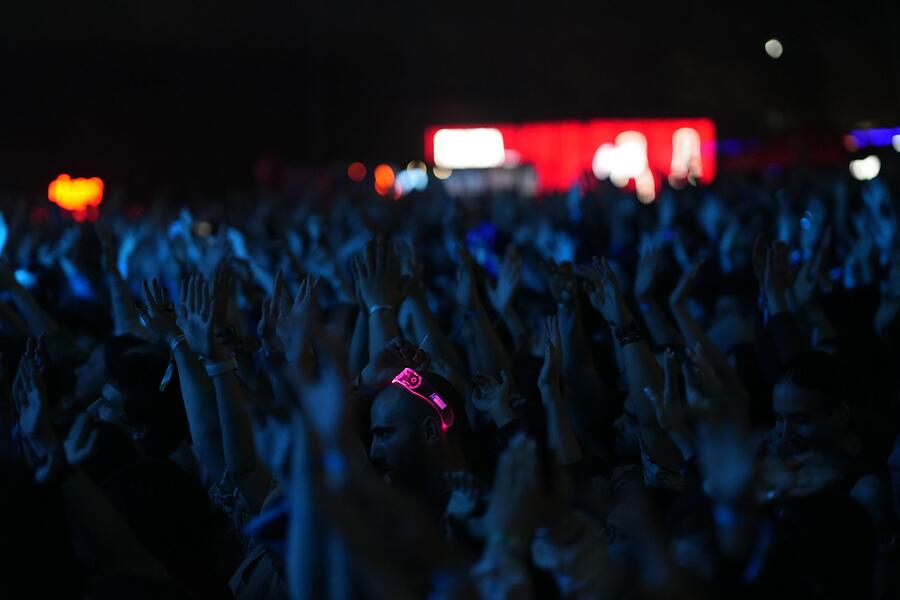
Winter Park's event calendar sits on Park Avenue and the brick streets around it. The Winter Park Sidewalk Art Festival has run since 1960 in Central Park and along the avenue, drawing attendance that usually reaches 250,000 or more across three days, which makes it one of the largest outdoor events in Central Florida. The Autumn Art Festival takes the same park on the second weekend of October, and Popcorn Flicks in the Park puts a free film in Central Park most months.
The private side is a different business. The Alfond Inn at Rollins runs a 5,000 square foot divisible ballroom seating up to 300 for dinner plus roughly 10,000 square feet of garden space for outdoor events. Casa Feliz, a restored Spanish farmhouse designed by James Gamble Rogers II, configures for celebrations up to 120. Kraft Azalea Garden covers 5.22 acres on the shore of Lake Maitland and can be reserved for small private ceremonies. Mead Botanical Garden runs to 47.6 acres with an amphitheater.
So the staffing question here splits cleanly. One side is a quarter of a million people in an unfenced park with artist inventory left out overnight. The other is 120 guests at a historic house where an officer in a high-visibility vest would look wrong in every photograph.
Central Park festivals leave saleable property outdoors
A multi-day art festival in an open park is an overnight problem before it is a crowd problem. Artists tent their booths and leave framed work, glass, jewelry and display equipment in a public park that borders a residential street on one side and a commercial street on the other. Coverage for these dates is built around the dark hours: officers walking assigned sections of the booth grid on an irregular pattern, a fixed position at the vehicle access point used for restocking, and documentation of anything found disturbed so an artist reporting a loss at 8am has a written record from the night. Daytime posts are fewer and sit at the information point, the beverage service and the stage.
Closing Park Avenue affects residents and merchants first
An event that closes the avenue or the streets beside it puts a footprint on top of businesses that still need deliveries and residents who still need to get home. Barricade posts hold the closure points, redirect drivers who take the turn out of habit, and keep the access lane open for the merchants inside the footprint. Officers on these posts spend the day in public conversation with people who are not attending your event, which is a different job from working a ticketed gate, and it is worth briefing them with the merchant access rules and the resident parking arrangements your permit sets out.
Historic house and garden venues ask for a different presentation
At a small private venue the officer becomes part of the guest experience whether you intend it or not. For a wedding at a historic house or a garden ceremony on the lake shore, coverage is usually one or two officers in business attire working the arrival point, the parking area during the first hour, and the room holding gifts and a card box. The brief includes who may be turned away and who from your side makes that call, because an officer at a family event needs a name to check against rather than a judgment to make. Alcohol service and a guest list that grew after invitations went out are the two things that most often add a position.
The college calendar overlaps the town calendar
Rollins College sits at the south end of Park Avenue, so campus events, commencement weekends and the Bach Festival Society season, which has been presented annually since 1935, put additional demand on the same parking and the same streets. For a private or corporate date, that matters as a logistics fact: parking that is normally available disappears, and the arrival plan you wrote in January does not survive a weekend when the town is already full. Tell us the date early and we will look at what else is on the avenue that weekend before setting the parking and arrival posts.
What an overnight in Central Park looks like
The overnight position is a slow walk through a grid of tented booths under oaks, with a flashlight, a radio and a section assignment. It is deliberately not a fixed post, because a stationary officer covers one aisle and a moving one covers the grid. Two officers walking opposing patterns cover a booth field better than three standing at the corners, and the pattern changes each night so it cannot be watched and timed.
Why Winter Park organizers and couples book this agency
-
Presentation matched to the venue
A festival barricade post and a garden wedding post are the same license and a different presentation. Officers work Winter Park private events in business attire and hold the position without becoming part of the evening, and festival posts run in the visible uniform the closure needs. We agree which it is during planning, along with where officers stand, what they carry and who they take direction from on the day.
Nexus Security Firm holds FDACS Class B agency license B 1900066, verifiable on the FDACS public lookup.
-
Overnight coverage priced as its own block
The dark hours are where an outdoor festival loses property, and they are also the hours nobody wants to pay for. We price the overnight as its own block, tell you how many officers a booth field of your size takes to walk properly, and say when two walking positions beat three fixed ones. Overnight hours sit high in the rate band because they are harder to staff, and that is stated before the contract.
Central Florida event coverage runs about $24 to $34 an hour unarmed, built on Florida guard wages of $14 to $18 (ZipRecruiter, Salary.com and Indeed, 2026).
-
A licensed agency, with supervision on the date
Every officer on a Winter Park post holds a Florida Class D license and works under agency license B 1900066. A supervisor is assigned to the event and attends the posts, which on a three-day festival means the overnight shift is visited as well as the busy Saturday. Incidents are documented and the documentation goes to you, which is what a city permit office or an insurer asks for afterward.
Behind every Class D card sit 40 hours of FDACS-approved training and a two year renewal (FDACS Division of Licensing).
A common call from a Winter Park event organizer
The situation: A typical three-day outdoor art festival takes Central Park and part of the adjoining avenue, with roughly 200 exhibitor booths, two beverage service points and a small stage. Booths stay standing overnight for two nights. The organizer has run the event before with volunteer overnight watch and had two booths disturbed on the second night, one of which was noticed only when the artist opened in the morning.
What gets done: The booth field is divided into sections and covered by two officers walking opposing irregular patterns through each overnight, with a third position at the vehicle access point during restock hours. Daytime coverage drops to a post at the information tent, one at each beverage point during service, and a rover through the busiest afternoon block. Barricade posts hold the closure points on the day the street is shut.
How it turns out: The organizer gets a section map showing what each overnight officer is responsible for and a written account of both nights. The daytime count comes down from the original request because the festival's own volunteers already cover the information function, and those hours move into the second overnight instead.
Winter Park event security questions
What organizers, couples and venue managers here ask first.
Festivals, private venues and cost
Do we need security for a free public festival with no tickets?
A free event has no admission point, so the coverage question moves to property and service points instead of gates. Overnight booth coverage, a post wherever alcohol is served, and barricade positions at street closures are the three that matter most. Crowd count is not something a private agency controls at an open park event, and a plan that claims otherwise is not a plan.
Will officers look out of place at our wedding?
They should not. Private event officers here work in business attire, hold the arrival point and the room with the gifts, and stay out of the photographs. The brief covers who they check with, what the rule is on an uninvited guest, and where they stand during the ceremony. That conversation happens before the date so nobody is improvising in front of guests.
Does our venue require licensed security?
Many Winter Park venues write licensed security into the rental agreement, particularly where alcohol is served, and they ask for proof before releasing the space. They accept the same proof each time: the agency license number and the officer licenses behind it, both from the Florida Department of Agriculture and Consumer Services. Ours is B 1900066 and you can look it up yourself.
What does a two-officer private event cost?
Unarmed officers in Central Florida run roughly $24 to $34 an hour, so an evening event with two officers over five or six hours lands in a range you can work out before you call. Florida guard wages of about $14 to $18 (ZipRecruiter, Salary.com and Indeed, 2026) and bill rates of 1.5 to 2 times wage (Belfry Software, 2026) are what sit behind that. Short-notice Saturdays sit at the top of the band.
What can an officer do about a guest who will not leave?
The officer asks the person to leave, documents what happened, and calls the Winter Park Police Department if they refuse. Private security in Florida holds no police powers, and that sequence is what keeps the problem off you. It is also why a name and a description given to us in advance is worth more than anything decided in the moment.
Still have a question? Call (407) 329-6099 and ask.
Other areas we staff events
Events in the adjoining areas run off the same roster, so a date in one does not rule out a date in another.