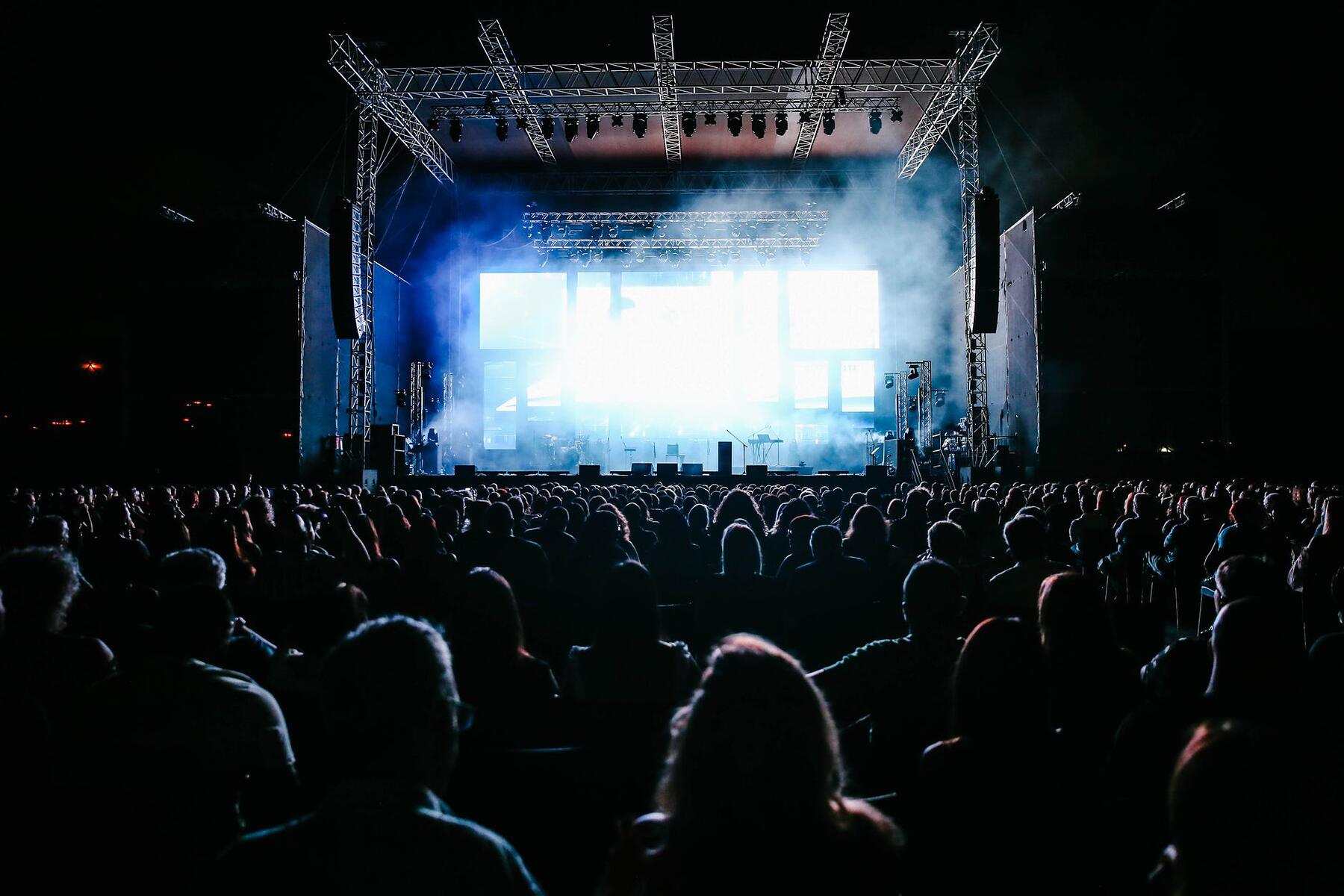
Event Security in Downtown Orlando
Downtown events here share their perimeter with a working street grid, a bar district and a lake park that has no fence. Nexus Security Firm staffs the closures, the barricade lines and the egress into Church Street after a room of twenty thousand people empties at once.
Event Security in Downtown Orlando
Downtown packs an arena, a performing arts center, a lakefront park and a nightlife strip into walking distance of each other. The Kia Center holds up to 20,000 for arena tours and is home to the Orlando Magic and the Solar Bears, and Church Street sits close enough that a crowd leaving a show is in a bar district within a few minutes of the doors opening. The Dr. Phillips Center for the Performing Arts, which opened in 2014, runs Broadway, orchestral and ballet programs out of the Walt Disney Theater and Steinmetz Hall a few blocks south.
What changes the security job downtown is that the venue is often the street itself. IMMERSE closes South Orange Avenue between the Dr. Phillips Center and City Hall along with stretches of West Church Street and East Pine Street. Come Out With Pride runs a parade that steps off at Washington Street and Orange Avenue and ends at Lake Eola Park. Fiesta in the Park fills Lake Eola with a 600-booth arts and crafts show on the first full weekend in November.
An event with a closure has no ticket boundary and no gate. Its edge is a barricade line, a sidewalk, a parking garage stair and a resident's driveway, and every one of those is a place where a person walks in without meaning to attend anything.
A street closure turns your perimeter into a line of cones
When the footprint is a public street, the perimeter is whatever the traffic plan says it is, and it needs people standing on it. Barricade positions at each closure point keep vehicles out of the footprint, direct residents and delivery drivers to the route that still works, and hold the corner where a driver who has not seen the sign tries to turn in. Closures on Orange Avenue and the cross streets around it also create a pedestrian pattern that did not exist yesterday, so officers at the interior corners keep the walking lanes open and stop the crowd from setting up in a fire lane. Your closure permit and traffic plan come first, and the post map is built from it.
Egress runs into a district that is already busy
A downtown crowd does not disperse, it relocates. Church Street is within an easy walk of the arena and stays busy with sporting event crowds, watch parties and seasonal festivals of its own, so a 10pm let-out from a show or a festival merges into people who have been drinking for three hours and never attended your event. Coverage plans the last hour as carefully as the first: officers at the exits that feed toward the district, a position at each garage stair and elevator lobby, and presence at the point where your footprint ends and the public sidewalk begins. That line is where most of the arguments happen, because it is where your rules stop applying.
Lake Eola events have a boundary you cannot lock
A park event downtown is open on every side and open all night. Lake Eola sits inside a residential and restaurant ring with paths entering from several streets, which means head count is an estimate and the footprint is entered from a dozen points. For a multi-day festival with booths, the overnight is the real exposure: stock and display property sit in a public park with nobody in it. Coverage for these dates is a mix of a walking overnight presence across the booth area, daytime positions at the main pedestrian entries where sponsors want a count, and a stage or beer garden post where alcohol service creates an ID line.
Alcohol service changes the post list and the rules
Where beer and wine are sold inside a closed street or a park footprint, the officer list grows by at least one position per service point and one at the ID check. Officers apply the rule your organization writes, including what happens to a wristband that has been passed along and what a vendor does with a guest who has had enough. The limit is worth understanding before the date. Private officers in Florida hold no police powers, so an intoxicated person who will not leave is asked to leave and the Orlando Police Department is called if they refuse. A bidder promising to remove people by force is describing exposure that ends up on your permit.
Load-in on a city grid is a traffic problem
Downtown has no back lot. Vendor trucks, staging, generators and portable structures arrive on streets that carried commuter traffic an hour earlier and will carry it again, usually through a single access point held open by your traffic plan. A load-in post checks vehicles against your vendor list at that access point, keeps the queue from backing into a live lane, and stays until the last vehicle is inside the footprint. The same position runs in reverse at load-out, which downtown often happens overnight because the street has to be open in the morning.
What a closure post looks like on Orange Avenue
A barricade post sits at the closure point in high-visibility over uniform, with the traffic plan in hand and a clear line to the officer on the next corner. The work is repetitive and public: redirect a driver, hold a pedestrian gap so an ambulance route stays clear, and answer the same three questions about parking for six hours. Placement matters more than count here, because one officer on the corner a driver approaches beats two standing where the map said the closure began.
Why downtown producers book this agency
-
The plan is built around your closure and your permit
A downtown post map starts with the approved traffic plan, the closure hours and the access point your permit names. From there we count barricade positions, interior corners, stage and bar posts, and the egress side. You get the count with hours against each position and the reasoning for it, so a producer can take a post out of the budget knowing which corner goes uncovered. Where a cheaper pattern holds the same footprint, we name it.
IMMERSE closes South Orange Avenue between the Dr. Phillips Center and City Hall plus stretches of West Church Street and East Pine Street.
-
Officers who understand where authority ends
Downtown puts your footprint against a public sidewalk, which is where the difference between a private event and a public street becomes a real question. Our officers work the sequence Florida allows: verbal direction, documentation, and a call to the Orlando Police Department when a person refuses to leave. That keeps your permit clean and keeps the incident on the record instead of in an argument. Every officer holds a Florida Class D license, with a Class G where a post is armed.
Florida asks 4 hours of firearms requalification a year from every Class G armed officer (FDACS Division of Licensing).
-
Supervision on the date, and documentation after it
A downtown event with eight scattered posts needs somebody moving between them. A supervisor is assigned to the event and attends the posts through the date, which is the arrangement worth demanding from every bidder along with an answer on what happens when an officer calls out. Incidents are documented and the documentation goes to you, which is what a venue, a sponsor or an insurer asks for when they want to know what happened at the north barricade.
Security industry turnover hit 77 percent in 2024, up from 69.3 percent in 2019 (ASIS International).
A typical downtown street festival call
The situation: A one-day street festival takes several blocks of a downtown avenue with four closure points, two stages, a beer garden and vendor booths on both sidewalks. The producer expects somewhere between 8,000 and 12,000 people across the day, with the heaviest hours after 6pm. The previous edition had drivers pulling into the footprint twice and a long argument at the beer garden when a wristband turned up on someone who had not bought one.
What gets done: Each closure point gets a standing post from the hour the barricades go out. Two officers work the beer garden, one on the ID line and one inside at the service points, and the wristband rule is written before the gates so it is the same answer every time. Two rovers walk the vendor rows during peak hours. The evening block adds officers on the egress side toward the bar district, and the load-out post holds the vehicle access point until the last truck clears.
How it turns out: The producer gets a post map that matches the permit, an hourly rate against each position, and a documented account of the day afterward. One daytime rover is cut in planning because the footprint is quiet until mid-afternoon, and those hours are moved to the egress side instead.
Downtown event security questions
What producers and venue managers ask about a downtown date.
Permits, closures and coverage
Does the city require licensed security for a downtown event?
Requirements come from your permit, your venue agreement and your insurance carrier, and they vary by event type and footprint. What all three accept is the same proof: a Florida agency license number plus licensed officers. Nexus Security Firm holds FDACS Class B agency license B 1900066, and it is a public record on the Florida Department of Agriculture and Consumer Services lookup.
Do officers handle traffic control at the closure?
Officers hold the closure point, redirect drivers and keep the footprint clear of vehicles. Sworn traffic direction on an open roadway is a law enforcement function and is arranged separately through your permit process. The two work together: your off-duty law enforcement detail covers the live lanes, and our officers hold the line where your footprint begins.
How do you plan for the crowd leaving at the end?
Egress is planned first and staffed last. We look at which exits feed toward the bar district and the garages, where the bottleneck forms, and where your footprint meets the public sidewalk. Posts move to those points for the final hour and stay through load-out, because the hour after the music stops produces more incidents than the four before it.
What does downtown event coverage cost?
Central Florida event posts run roughly $24 to $34 an hour unarmed and $32 to $46 armed, built on Florida guard wages of about $14 to $18 and $18 to $26 (ZipRecruiter, Salary.com and Indeed, 2026) and industry bill rates of 1.5 to 2 times wage (Belfry Software, 2026). Late-night hours, holiday weekends and single-date bookings sit at the top of the band because they are the hardest to staff.
Do we need armed officers downtown?
Most downtown festival and venue work runs unarmed. Arming follows the specific risk at a specific post: cash handling at a box office, a person with a standing threat concern, or a venue requirement written into your agreement. We will say when an unarmed post covers the same ground, because that is also the cheaper answer.
Still have a question? Call (407) 329-6099 and ask.
Other areas we staff events
Events in the adjoining areas run off the same roster, so a date in one does not rule out a date in another.