Event Security Officers in Orlando
Nexus Security Firm staffs conventions, concerts, corporate meetings and private events across Orange County under FDACS Class B agency license B 1900066. Give us the date, the venue and the head count you expect, and you get a post plan with the hourly rate broken out before anything is signed.
Event security services in Orlando
Six kinds of event coverage, each staffed by licensed Florida officers under one agency license. Most dates use more than one: a trade show buys dock coverage and badge check, a festival buys crowd management and a backstage post.
Convention and Trade Show Security
Nexus Security Firm staffs show floors, docks and badge checkpoints for conventions and trade shows across Orange County under FDACS agency license B 1900066.
Learn more →Concert and Festival Security
Nexus Security Firm staffs gates, bag check, barricade lines, bar positions and load-out for concerts and festivals across Orange County under FDACS agency license B 1900066.
Learn more →Corporate Event Security
Nexus Security Firm staffs corporate meetings, conferences, product launches, sales kickoffs and annual gatherings across Orlando hotels and meeting venues under FDACS agency license B 1900066.
Learn more →Private Event and Wedding Security
Nexus Security Firm staffs weddings, receptions, milestone parties and private gatherings at Orlando venues, estates and vacation properties under FDACS agency license B 1900066.
Learn more →Crowd Management and Access Control
Nexus Security Firm staffs gates, queues, credential checkpoints and zone boundaries for Orlando events under FDACS agency license B 1900066.
Learn more →VIP and Backstage Security
Nexus Security Firm staffs backstage boundaries, green rooms, talent arrivals, meet-and-greet lines and VIP areas for Orlando events under FDACS agency license B 1900066.
Learn more →Events that bring planners to this line
Orlando runs on gatherings, and the security problem changes with the room. These are the six situations behind most of the calls that come in.
-
A convention or trade show with move-in and move-out
The Orange County Convention Center runs roughly 200 events and more than 2 million attendees a year (OCCC / Orange County), and the exposure is rarely the show floor during show hours. It is move-in and move-out, when the docks stand open, badge enforcement has not started, and a booth holds product that nobody is standing next to. Coverage for these dates means dock posts, badge check at the hall entrances, and officers on the floor overnight between show days when the hall is dark and crates are still open.
-
A concert or festival with a general admission crowd
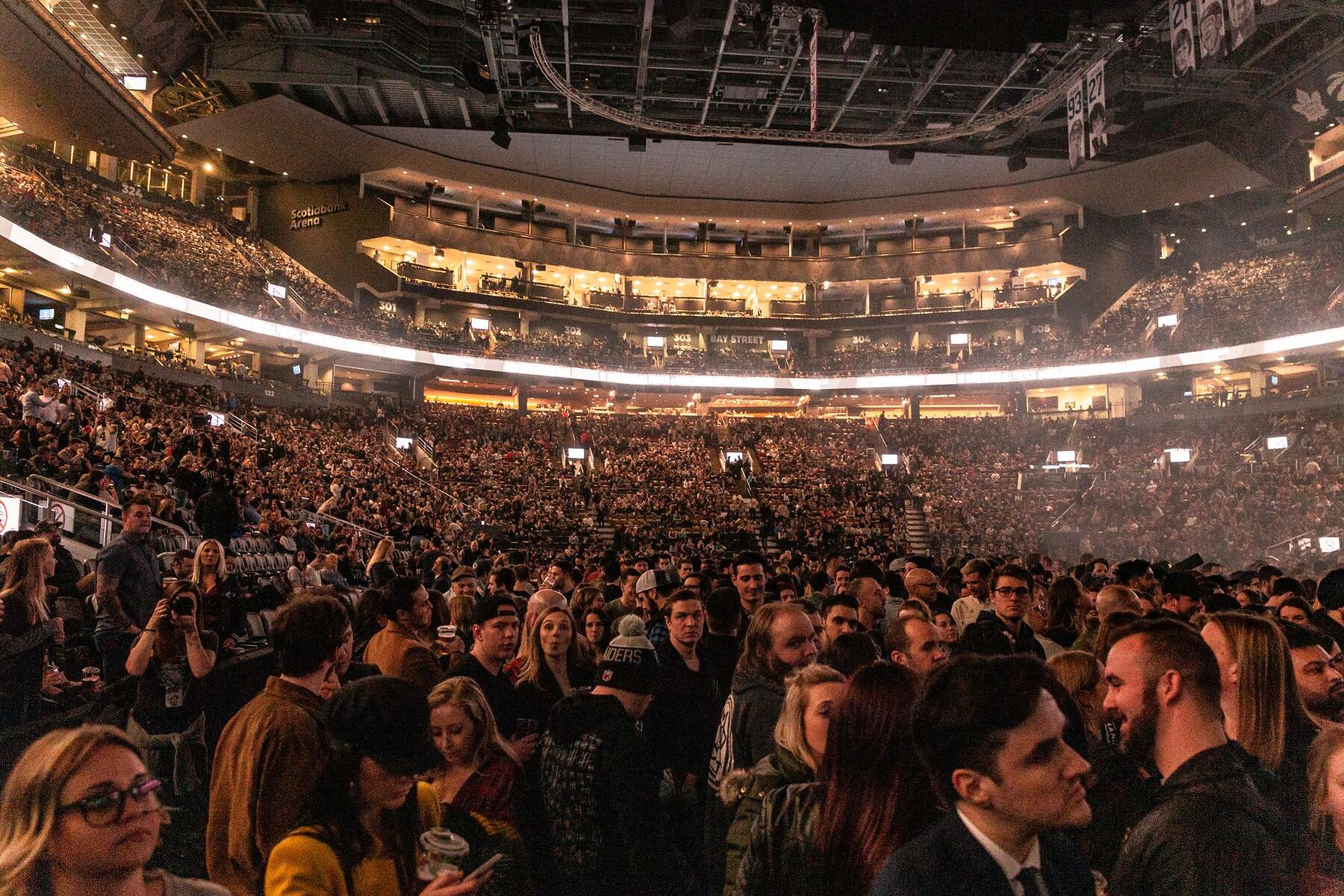
Orlando took 76.7 million visitors in 2025 (Visit Orlando), so a festival crowd is largely people standing in a venue they have never been inside. They do not know where the second exit is, which gate matches their ticket, or where the medical tent sits. Coverage is built around ingress at the doors, the barricade line at front of house, bag and wanding positions, and the officers who keep an aisle open when a section fills. Alcohol service adds positions at every bar and at the ID check.
-
A corporate meeting, launch or annual gathering
Corporate dates turn on who is allowed into which room and when. Registration desks hand out credentials that then have to mean something at the door of a closed session, a keynote stage or a hospitality suite. Where an executive has a standing concern, armed coverage is available: a Florida Class G license carries 4 hours of firearms requalification each year of the two-year cycle (FDACS Division of Licensing). Most corporate work runs unarmed, with a supervisor assigned to the event and attending the posts through the day.
-
A wedding or private party at a rented venue
Private events buy officers for three reasons: the venue contract requires licensed security, alcohol is being served to a guest list that grew after the invitations circulated, and there is a gift table or a card box in a room with an open door. Officers work inside the law that applies to everyone, so a person who will not leave is asked to leave and law enforcement is called if they refuse. That limit is worth understanding before the date, because it shapes what a private event post can settle.
-
A venue or insurer requiring licensed staff on the contract
Venues across Orange County write licensed security into the rental agreement and then ask for proof before they release the room. What satisfies them is an agency license number plus officer licenses, both issued by the Florida Department of Agriculture and Consumer Services. Our agency license is B 1900066 and it is a public record you can pull up on the FDACS license lookup without asking us for anything. Officers hold a Class D license, which requires 40 hours of FDACS-approved training and runs two years.
-
A gap in the plan close to the date
Head count jumps after a second ticket release, a room change adds a door that needs watching, or the staffing vendor you had booked stops answering. Dispatch is staffed 24 hours a day, every day, and the answer on that call is the number of officers that can be posted and what the hours cost. Short-notice dates and single-shift posts sit at the top of the rate band because they are harder to staff, and we say so on the call instead of after the invoice.
Why planners book this agency
Three things separate a staffing plan that holds on the day from one that falls apart at the second door.
-
A Florida agency license with a number you can check
Nexus Security Firm holds FDACS Class B agency license B 1900066, and every officer posted at your event carries a Florida Class D license, with a Class G added where the post is armed. You can verify all of it through the FDACS Division of Licensing public lookup before you sign, which is the same check a venue or an insurance carrier runs. Ask every bidder for an agency number. A company that describes itself as licensed and cannot produce the number has told you something.
A Class D license requires 40 hours of FDACS-approved training and is valid two years (FDACS Division of Licensing).
-
Post counts built from your floor plan and your doors
Staffing is worked out from the room: how many entrances, how many of them are credentialed, where the loading dock sits, what the venue lists as capacity, and how the crowd moves between sessions or sets. That produces a post-by-post plan with a head count and hours against each position, so you can see where the money goes and cut a post you decide against. A supervisor is assigned to the event and attends the posts, and incidents are documented with the documentation going to you.
The convention center supports 28,000 jobs and $4.6B in annual economic impact (OCCC / Orange County).
-
The rate is explained before you commit to it
Event coverage in Central Florida runs roughly $24 to $34 an hour unarmed and $32 to $46 armed. That range comes from Florida guard wages of about $14 to $18 unarmed and $18 to $26 armed (ZipRecruiter, Salary.com and Indeed, 2026) and an industry bill rate of 1.5 to 2 times the wage (Belfry Software, 2026). Overnight hours, holidays, armed posts and short-notice dates sit high in the band. Where a thinner coverage pattern would serve your event as well, we say which posts to drop.
Officer pay is about 70 percent of the bill rate, with roughly 10 percent indirect cost (Belfry Software, 2026).
Send the date and the venue
Tell us the event date, the venue, the expected head count and the hours you need covered. You get a post plan and an hourly rate you can put in front of a client or a board. Dispatch is staffed 24 hours a day, every day.
Estimate what coverage for your event date costs
Event coverage comes down to officer hours and the staffing ratio the venue and the head count call for. Five questions gives you a working range before anyone walks the floor plan.
Figures rest on Florida guard wages (ZipRecruiter, Salary.com, Indeed, 2026) and the standard 1.5x to 2x markup (Belfry Software, 2026). Venue rules and the final head count move the staffing number.
The numbers behind Orlando event work
Four figures that set the scale of the market and the standard officers are held to.
- 76.7M Visitors to Orlando in 2025, still the most-visited destination in the country Visit Orlando
- 2M+ Attendees a year across roughly 200 events at the Orange County Convention Center OCCC / Orange County
- 40 hours FDACS-approved training behind a Florida Class D officer license, valid two years FDACS Division of Licensing
- 77% Security industry turnover in 2024, up from 69.3 percent in 2019 ASIS International
How an event gets staffed
Four steps run from the first call to the documentation that lands after load-out.
-
The call
Date, venue, hours, expected head count, whether alcohol is served, and whether anything about the event has drawn attention. Dispatch is staffed 24 hours a day, every day, so the call can happen the week you book the room or the night a staffing vendor drops out.
-
The walk or the floor plan
For anything with multiple entrances we walk the venue with you, or work from the floor plan and the venue rules where the room is already booked solid. Doors, docks, stage access, bar positions, blind corners and the routes between them are what set the post count.
-
The written plan and rate
You get every post named, the hours against it, the officer type at it, and the hourly rate that produces the total. Where a post is optional it is marked as optional, and where a cheaper pattern covers the same risk we say which one.
-
Event day and afterward
Officers arrive in uniform for the brief, a supervisor is assigned to the event and attends the posts, and anything that happens is documented. The documentation goes to you, which matters when a venue, an insurer or a client asks what occurred at 11:40 at the south door.
What to expect
Each booking follows the same path from first call to load-out, so nothing is improvised.
- A call with a person, at any hour
- A written scope of the post and the hours
- A rate with the factors behind it named
- Licensed officers assigned to the post
- A supervisor who attends the site
- Documentation of what happened on shift
Event security questions planners ask
The questions that come up most on a first call, grouped by what they decide.
Staffing, cost and booking
How many officers does my event need?
It comes from doors and head count more than from guest list size alone. A single-entrance corporate reception for 200 can run on two officers, while a festival with four gates, a bar program and a barricade line can need twenty at the same attendance. The count we build names each post, so you can see what each one covers and remove any you decide against.
What does event security cost in Orlando?
Central Florida event coverage runs roughly $24 to $34 an hour unarmed and $32 to $46 an hour armed. Florida guard wages run about $14 to $18 unarmed and $18 to $26 armed (ZipRecruiter, Salary.com and Indeed, 2026), and industry bill rates run 1.5 to 2 times the wage (Belfry Software, 2026). Overnight hours, holidays, armed posts, short-notice dates and single-shift bookings sit at the top of the band.
Do we need armed officers?
Most events do not. Arming follows the actual risk at the post: cash on site, a person with a standing threat concern, or a venue requirement. A Class G armed license carries 4 hours of firearms requalification every year of the two-year cycle (FDACS Division of Licensing), and the higher rate reflects that. We will tell you when an unarmed post covers the same ground.
How far ahead should we book?
As soon as the date and the venue are set, because that is when post counts can still change the budget. Large convention dates and peak-season weekends fill first. Short-notice dates are taken as well, and dispatch is staffed 24 hours a day, every day, with the understanding that short notice sits high in the rate band.
What happens if the head count changes?
Tell us and the post plan is rebuilt before the date. A second ticket release, a room change or a new VIP arrival can each add a position. Changes made in advance cost the hourly rate for the added post. Changes made on the day depend on who is available, and we will say plainly what can be covered.
Authority, licensing and the day itself
Can your officers remove someone from my event?
Officers ask a person to leave and call law enforcement if they refuse. Private security in Florida holds no police powers, and the correct sequence at an event is verbal direction first, then Orlando Police or the Orange County Sheriff's Office. A bidder promising to detain unruly guests is describing exposure you would end up carrying.
Can officers detain a guest who steals something?
Detention is outside what contracted event officers do. The work is presence at the point of exposure, documentation of what was seen, and a call to law enforcement who can act on it. For exhibitor and merchandise theft, the practical protection is a post at the dock and in the aisle during move-in and move-out, when most of it happens.
Do officers check bags and credentials?
Yes, where the venue and your event rules allow it. Bag check, wanding and credential verification are standard event posts, and they work when the rule is written before doors open: what is prohibited, what happens to a prohibited item, and who at your organization decides an exception. Officers apply the rule you set.
Who supervises the officers on the day?
A supervisor is assigned to the event and attends the posts during the date. That is the answer worth demanding from every bidder, along with what happens when an officer calls out an hour before doors. Industry turnover hit 77 percent in 2024 (ASIS International), so the supervision and relief arrangements behind a bid matter as much as the hourly number on it.
How do I verify your license?
Look up agency license B 1900066 through the Florida Department of Agriculture and Consumer Services Division of Licensing. It is a public record. Officer licenses come from the same agency: Class D for unarmed, Class G added for armed. Ask every bidder for an agency number and check it, because that is the one credential that cannot be written into a brochure.
Still have a question? Call (407) 329-6099 and ask.